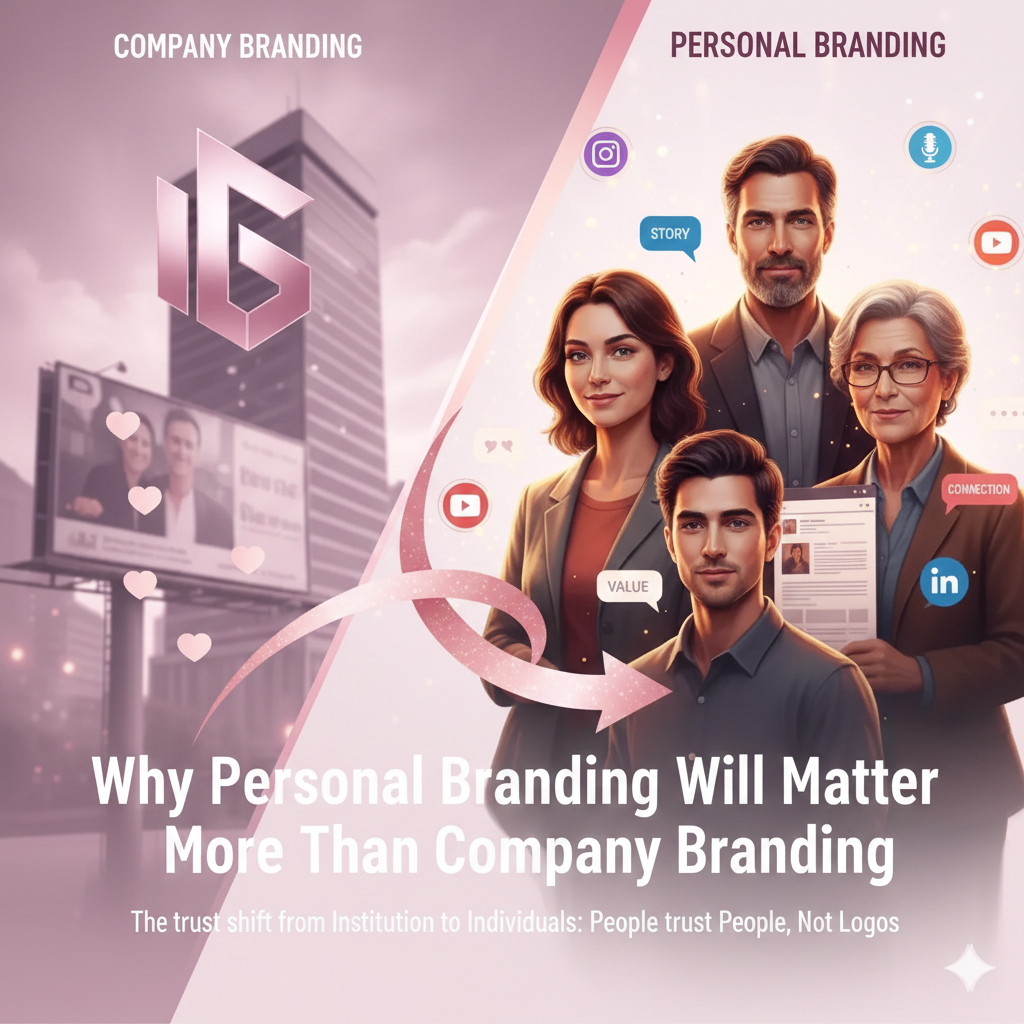
For many years, logos, taglines, ad campaigns, and corporate offices were enough to establish credibility and trust. Company branding dominated because businesses controlled how messages were shared. But the internet has completely changed how trust is formed. Today, trust is steadily shifting away from companies and toward individuals.
People now choose to follow founders, creators, experts, and employees rather than faceless brands. They connect more deeply with real people, their opinions, stories, and values. This shift is why the need to build personal branding is no longer optional. In a digital-first world, individuals who build personal branding often carry more influence and trust than company branding alone.
The trust shift from Institution to Individuals
The main reason for the growth of Personal Branding was trust. Companies controlled communication before. Messages flowed one way like brand to customers. Now the internet has flattered that structure. Today anyone can share insights,experiences and opinions publicly.
Now, people trust
- Individuals over Institutes.
- Experts over advertisements.
- Creators over campaigns
When someone chooses to build personal branding online, they are no longer waiting for a company to speak on their behalf, they are becoming their own voices.
This doesn’t mean company branding is useless, it means personal brands now act as trust bridges between Institutes and Individuals.
People trust people, not logos
Humans naturally connect with humans. We remember faces, stories and personalities way better than company slogans. This is why individuals often have stronger engagement on social media platforms than company pages.
When professionals build personal branding through consistent posting whether on linkedIn, blogs or any other social media platforms, they create familiarity. Gradually familiarity turns into trust. Then trust influences decisions.
Personal branding creates relationships while company branding creates awareness.
Limits of Company branding
For scale and recognition company branding plays an important role. Although, it has clear limitations.
- It requires time to build.
- It often feels impersonal.
- It depends on budgets and campaigns.
- It struggles to adapt quickly.
When individuals build personal branding authority, they can give faster responses, share their authentic thoughts, and modify their messages on the fly. This agility gives personal brands a major advantage in the digital world.
Personal brands create emotional connection
Personal branding speaks to smaller people (but more deeply) while company branding is designed to appeal to a large audience.
You are not trying to appeal to everyone when you build personal branding authority. You attract people who relate to your thinking, your values and experiences.
This emotional connection is powerful because,
- It builds loyalty
- It encourages conversations
- It creates long term relationships
Company branding only rarely reaches this level of connection on its own.
Careers are getting personal, not corporate
Job security today looks very different from the past. Roles change quickly. Skills become outdated. Industries evolve..
People who build personal branding visibility have an advantage in this environment. They are recognized for who they are, not just the role they hold.
A strong personal brand provides unique benefits that company branding cannot. It allows you to,
- Find jobs without even applying
- Reduces dependence on a single company
- Naturally draw a stream for a new professional opportunities
Why people ignore traditional marketing
The internet trained people to ignore most content. The real problems of brands are ad fatigue, banner blindness, and information overload.
Even though, people respond differently when individuals build personal branding trust through valuable content. Thoughtful experiences, educational posts and real experiences don’t feel like marketing, they feel useful.
This is the reason behind why personal brands often outperform companies in organic reach and engagement.
Before promotion, personal branding builds authority
One of the biggest strengths of personal branding is that it builds authority without selling.
People begin to associate your name with a specific topic when you build personal branding authority by consistently sharing knowledge. Your opinions carry weight over time.
By the time, you promote something whether it’s an idea, product or service. The audience already trusts you. Company branding tries to build trust after promoting when personal branding does it before.
Companies now depend on personal branding
Today, too many successful companies grow because of the people behind them. Leaders, founders and employees act as public voices for the brand.
When companies build personal branding presence:
- Trust increases
- Reach expands organically
- The company feels more human
Smart companies encourage this because they know more than corporate messaging people trust people.
Personal branding isn’t about attention seeking
In reality, personal branding is about clarity. Not about being loud or chasing followers.
You don’t need to share everything to build personal branding effectively. You have to share meaningfully and consistently.
Strong personal brand focus on:
- Sharing insights instead of opinions alone
- Teaching instead of promoting
- Consistency instead of virality
The goal is trust, not fame.
The compounding effect of personal branding
Personal branding works like compound interest. The result may feel slow at the time, but they grow over time.
When you build personal branding presence consistently:
- Recognition increases
- Content accumulates
- Credibility strengthens
Company branding often resets with each campaign while personal branding grows continuously.
Why the future belongs to people
Humans’ perspectives become more valuable when artificial intelligence and automations increase.
Today those who build personal branding trust will stand out in the future filled with generic content. Their voices will matter because it’s human.
In future people won’t ask:
“What company does this come from?”
They’ll ask:
“Who is behind this?”
Final thoughts
Company branding no longer holds the strongest influence on its own—though it still carries value and identity. In today’s digital-first world, trust is built through people, not just logos or corporate messaging. Audiences connect more deeply with real faces, real voices, and real stories.
Individuals have become the most powerful brands. When you build personal branding influence, you create credibility, familiarity, and long-term relevance that extends far beyond any single company, job title, or platform. A strong personal brand follows you wherever you go and continues to grow with every interaction you make.
This is why personal branding will matter more than company branding—not just today, but in the years ahead. As attention shifts toward authenticity and human connection, people will continue to trust people over institutions.